
CPP Newsletter
Summer 2025


Welcome!
For other editions of the CPP Newsletter, click here.

Oh, the Places We’ve Gone
2025 CPP Bay Area Conference

This past February, over 100 CPP Providers convened in San Francisco for the second CPP Bay Area Conference, hosted by the UCSF Child Trauma Research Program! The event featured a keynote with CPP Co-Developers Alicia Lieberman and Chandra Ghosh Ippen, clinical workshops with CPP Trainers, and vibrant networking sessions. It was a joy to connect with CPP providers from California, Illinois, New Mexico, Florida, New Hampshire, New York, and everywhere in between.
The conference was a resounding success with opportunities for fostering connections, deepening skills, and reaffirming the transformative power of CPP and its practitioners. We look forward to the continued growth and collaboration with the CPP community.
Some reflections from attendees:
Testimonials
New Hampshire CPP Annual Conferences
In March, the third Annual New Hampshire CPP Provider Network Conference took place in Bedford, NH. The program featured a daylong keynote presentation by CPP Co-Developer Chandra Ghosh Ippen, PhD, on play with a case presentation by Margreta Doerfler, LICSW, a NH CPP Provider Network member.
This conference was part of a robust series of events organized by the NH CPP Provider Network. Another event in the series is an annual cross-systems collaboration conference for CPP stakeholders. The network also hosts two annual day-long booster sessions covering CPP fidelity, ports of entry, social location, and the state’s assessment protocol. For Cassie Yackley, the director of the NH CPP Provider Network, these training activities have benefits beyond sharpening clinical skills—they also serve to foster institutional relationships, reinforce a shared understanding of the work, and demonstrate gratitude to CPP teams. These efforts are crucial in building a sense of shared purpose across the state’s community of providers.

Leader Spotlight
Mimi Graham has been a driving force for CPP in Florida. To Mimi, CPP is more than an evidence-based practice—it embodies a deep understanding of the healing power of the parent-child relationship, especially in the face of trauma. Reflecting on CPP’s impact, Mimi said:
“It’s just the magic sauce… [with CPP] we’re changing, we’re transforming people’s lives who have been dealing in trauma their whole entire life. And to stop the cycle so that baby doesn’t grow up in the same kind of cycle. I mean, it’s just the best thing since sliced bread. I just can’t understand why we don’t have it everywhere”

Mimi Graham, PhD
Director, Center for Prevention &
Early Intervention Policy
Florida State University
Mimi began her IECMH journey as a Head Start Director and later principal at the Mailman Center for Child Development’s Debbie School at the University of Miami, before becoming Director of the Center for Prevention & Early Intervention Policy at Florida State University. This foundation laid the groundwork for her leadership in bringing CPP to the state.
In 2000, Mimi collaborated with Dr. Sandra Adams—a Sarasota-based early childhood specialist and ZERO TO THREE (ZTT) Fellow—to create Florida’s first statewide strategic infant mental health plan. Dr. Adams later nominated Mimi for a ZTT fellowship, where Mimi advanced that plan into a training framework to meet Florida’s mental health needs for infants and families. She called the fellowship an “intellectual candy store” full of inspiring colleagues, reinforcing the importance of recruiting the right clinicians, trainers, and systems partners. Mimi led efforts to secure funding and cultivate four outstanding CPP trainers for Florida, with support from Drs. Joy Osofsky and Mindy Kronenberg. Valerie Dallas, CPP State Trainer and statewide training coordinator, praised her recruitment efforts, saying Mimi was committed to “finding clinicians who have a great understanding of what CPP is before they sign up for the training.”
Among her many contributions, one of the most impactful has been advocating for CPP as the core evidence-based intervention in Florida’s Early Childhood Courts program. Kristie Skoglund, CPP State Trainer, noted, “Because of the effectiveness and compelling outcomes for children in child welfare, CPP is the intervention prescribed in Florida’s Best Practice Standards for Early Childhood Courts.” Florida TaxWatch, a government budget research group, found CPP helped children reach permanent placement 4.75 months faster and could save the child welfare system over $100 million annually.
Mimi Graham’s story is one of vision, persistence, and unwavering commitment to Florida’s children and families. “Her legacy is unmistakable,” says Heidy Garcia, CPP State Trainer. Sharon Ross-Donaldson, also a trainer, noted that “from infant mental health, we saw the flowering and the growth right into CPP.” Mimi’s advocacy has put

CPP on the map in Florida and built a strong foundation for its continued expansion. She continues to push for enhanced CPP reimbursement from insurers, dedicated funding, and clinician training—such as online content for judges and providers serving in Early Childhood Courts. In doing so, she ensures that the healing power of CPP reaches Florida’s youngest citizens.
She continues to push for enhanced CPP reimbursement from insurers, dedicated funding, and clinician training—such as online content for judges and providers serving in Early Childhood Courts. In doing so, she ensures that the healing power of CPP reaches Florida’s youngest citizens.
Provider Spotlight
Margreta Doefler’s journey with CPP began in community mental health, where she primarily worked with teens. Initially, she felt unprepared: “Given my lack of clinical experience, I was entirely intimidated by CPP and young children with adverse experiences.” Over time, she was drawn to working with younger populations. A pivotal shift came when she joined a group practice focused on maternal wellness. “I found that I really, really enjoyed [focusing on] maternal wellness in the perinatal period,” she reflects.
Another transformative point came when Margreta became a mother to a child with a heart condition. She credits her initial CPP interest to two friends—both CPP-trained—who had children at the same time. “…we had hours and hours of conversation about our personal experience of becoming mothers, which, of course, was influenced by their knowledge and experience with CPP.” Her son’s early medical treatment—medication, procedures, hospitalizations—highlighted for her how trauma impacts attachment, infant development, and maternal wellness.
In 2022, shortly after her second child was born, Margreta joined a CPP Learning Collaborative. The model deeply resonated with her lived experience and therapeutic approach, particularly its emphasis on reflection: “[CPP] just brought everything together and helped me view it [all] from a different lens.”

Margreta Doerfler, LICSW ECIMHC
Psychotherapist, Practice Owner
(Mindful Moments LLC), Certified mindfulness practitioner, and
Reflective Practice Consultant
Now in private practice, Margreta offers continuity of care that spans the perinatal period into CPP post-birth. She integrates mindfulness to support birth planning, address fears, and prepare for postpartum. She has seen many successful closures with improved trauma symptoms and finds it especially gratifying when “the mother’s perception of her birth experience can influence attachment and baby’s wellness.” She particularly values work with dyads navigating medical trauma or perinatal mental health challenges: “There isn’t anything that is more fulfilling to me.”
Margreta is grateful for the New Hampshire CPP Provider Network, fostered by Cassie Yackley, which supports her CPP work. She also gives back by leading mindfulness activities during CPP trainings, emphasizing clinician well-being and self-care. Additionally, she helps guide others in becoming credentialed in early childhood and infant mental health.
Margreta’s path reflects a deep dedication to maternal wellness and relational healing. She remains committed to integrating her learning into practice to ensure families receive the best possible care.
Honoring Our Angels
“Everybody talks about ghosts in the nursery. Are there also angels in the nursery?”
Bill’s question reminds us that, as a field, we are often so focused on addressing challenges and repairing harm that we do not leave enough space for equally meaningful experiences of intergenerational love and care. His question connects to the idea that we must embrace the chiaroscuro of emotional life to integrate the polarities of being. Seemingly contradictory, dueling experiences of pain and nurturance often exist side by side, and the integration of these experiences can open the door to understanding and healing. Bill’s reflection also inspires us to look beyond what we know and hold dear to search for critical aspects of experience that we may be overlooking. Finally, his question evokes who he was: Bill Harris—a dear colleague and friend, a very wise soul, and a passionate champion for young children and families in need.
Bill passed away in January 2025. Many in our field may not know his name, but our field in its current form would likely not exist without him. He is a true angel in our collective nursery, a man who dedicated his life to advocating for ways that systems must shift to better serve children and their families. Below are some of his key contributions to our work.

Bill with Congresswoman Rosa DeLauro and members
of the UCSF Child Trauma Research Program
Angels in the Nursery
The concept of angels in the nursery was born as Bill watched his son play with his grandchild. He remembered his wife, Robie, and the beautiful way that she played with their son, and he reflected on how Robie often spoke about how her beloved mother’s loving care shaped her love of children, the transmission of love across generations. Bill called Alicia and shared this simple but profound question, “Everybody talks about ghosts in the nursery. Are there also angels in the nursery?” This concept, further elaborated in the article Angels in the Nursery, has shifted the work of many.

Bill with Dr. Alicia Lieberman,
Co-Developer of CPP
Changing the System through Advocacy
He encouraged us to partner with systems—courts, child welfare, and perinatal services—because, as the term he coined in his influential article In the Best Interests of Society, “trauma is supraclinical.” We need to move beyond mental health clinics to adopt a coordinated, comprehensive public health education and policy to prevent and repair childhood trauma.
Bill not only talked and wrote about the urgency of changing systems and taking a public health approach, he also took decisive and influential action. He advocated for a Presidential Commission on childhood trauma and mentored many of us to become involved with public policy. He recognized that the work we do is critically important, that it would be difficult to sustain without the support of policymakers, and that it requires a comprehensive approach. His advocacy was critical to the formation of the National Child Traumatic Stress Network, funded since 2001 by the Substance Abuse Mental Health Service Administration. He helped envision and create a national network that brings together scholars and practitioners from across the country to better serve children and families who had experienced trauma. He encouraged our team at the Child Trauma Research Program to apply for a grant because he knew the shocking prevalence of early childhood trauma, that risks could be addressed early, and that young children are often overlooked and underserved. His encouragement helped shape the trajectory of our work.
Bill made a difference in ensuring that more young children and families now have access to trauma-informed services. He deserves to be celebrated and honored. His memory is a blessing. He lives in our hearts and in the work that we all do.
The Road Ahead
We are excited to share a preview of the new CPP website! We have partnered with a designer to update both the look and layout.
Stay tuned for future updates, including the roll-out of a new portal for CPP training!The conference was a resounding success with opportunities for fostering connections, deepening skills, and reaffirming the transformative power of CPP and its practitioners. We look forward to the continued growth and collaboration with the CPP community.


Gratitude
After many years of bringing CPP to the world, several of our CPP Trainers are in the process of retirement. To honor them and their wonderful contributions to the CPP community, we have asked them to reflect on their experiences.
Martha Robb
“I read The Magic Years in college. Following a Minnesota PhD, I worked in New Hampshire community mental health, trained psychologists and disseminated EBTs at Dartmouth College before joining Cassie to spread the magic of CPP. Many thanks to Joy Osofsky, Patricia Van Horn, Julie Larrieu and Carmen Rosa Noroña, who mentored us, and to Alicia Lieberman and Chandra Ghosh Ippen for their exquisite guidance. It has been a privilege to train 8 New Hampshire cohorts (124 clinicians), to watch clinicians’ transformation and to witness the evolving beauty of families’ healing. A lovely quote came from a clinician who, initially skeptical about her ability to genuinely speak for baby, stated “After having a child myself, speaking for baby made total sense.””

Sheila Marcus
“As a child and adolescent psychiatrist with interest in perinatal and early childhood mental health, it was an honor to learn and to teach Child-Parent Psychotherapy. I was very fortunate to have Drs. Lieberman and Ghosh Ippen as mentors and teachers and will forever be grateful. The state of Michigan training program, as well as the University of Michigan Learning Collaborative, grew out of a need that I recognized in my role as director of the MC3 pediatric access program. This is a program that provides education and consultation to primary care, school, and emergency room clinicians throughout the state of Michigan. It was evident to me that the tenants of trauma-informed care were poorly understood in primary care settings, and many children were over-medicated. In attempts to get them into appropriate psychotherapy, it became clear that there were insufficient therapists trained in CPP.
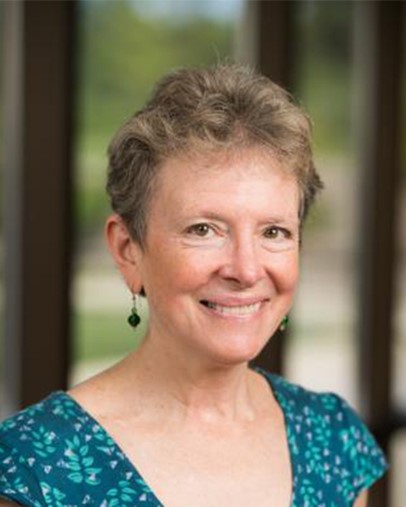
It was this enormous need that motivated me and our Michigan team, including Kate Rosenblum, Maria Muzik, as well as Katie Bresky and Karen Smith, to get trained and to continue to train in the state of Michigan. I hope that others will continue to benefit as I continue to disseminate these tenets of trauma-informed care in my retirement work with underserved parents and children.”
“I believe that courage is the most important of the virtues. Because without courage you can’t practice any of the other virtues consistently. You can be kind for awhile, you can be generous for awhile, you can be just for awhile, you can be merciful for awhile, you can even be loving for awhile.
But it is only with courage that you can be persistently and insistently kind and generous and fair.”
-Maya Angelou
Paula Ray
“Dr. Paula Ray trained in CPP with the initial training cohort from the Nebraska Project for Vulnerable Young Children under Joy Osofsky. Paula has been a CPP clinician and trainer In Nebraska since 2009. She completed post-doctoral training in advanced Child assessment and Infant Mental health in Southern California. Having worked in Early Intervention and pediatric neuropsychology Paula brought to trainees a transdisciplinary understanding of the impact of trauma on neurodevelopment with emphasis on identification and referral for Early Intervention. Paula is a children’s book author and theater artist with past work and publication in the field of drama therapy. Her book “Max and the Listening” inspires a child’s self-confidence and love of nature and is available at lulu.com.“

Kyrie Sankaran
“I began my CPP journey in 2008 as part of the NCTSN learning collaborative and had the privilege of training several cohorts across California and Kentucky through 2024. That journey included being part of the early effort to launch CPP training at the Children’s Institute in Los Angeles, in collaboration with Project ABC—helping establish CPP as a central trauma treatment for young children and their families. This work grew to support county-wide trainings in Los Angeles and the development of reflective supervision across systems.”
CPP gave voice to the unspeakable for so many families. It was an honor to support therapists and supervisors in holding space — not just for family stories but for their own responses, too. I remain deeply grateful to Alicia Lieberman, PhD, the late Patricia Van Horn, PhD, Chandra Ghosh Ippen, PhD, and to Maricella Mendez-Sherwin, PhD, for her unwavering support. A warm thank you also to Mindy Kronenberg, PhD, my co-trainer in Kentucky.

Even as I retire from CPP, the model continues to inform my work with adult clients today. I carry its lens with me always. Fun fact: I’ve since taken my CPP lens outdoors—into the quiet, reflective world of bird and nature photography.
With gratitude and love,
Kyrie Sankaran, Ph.D.”